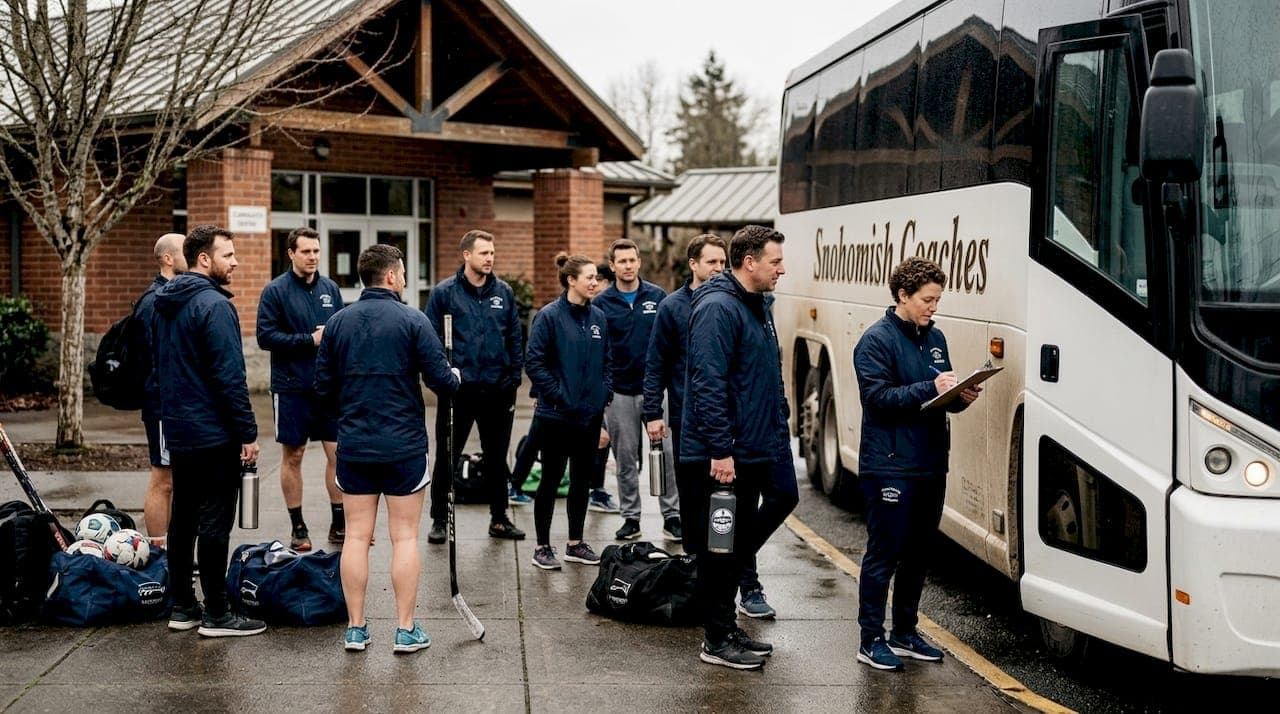
Getting a team from point A to point B sounds simple until you're the one responsible for it. Between managing group size, staying within budget, navigating local parking rules, and keeping everyone on schedule, team transportation quickly becomes one of the most stressful parts of event planning. Whether you're coordinating a corporate offsite, a youth sports tournament, or a company retreat in Snohomish County, the wrong transport choice can cost you time, money, and credibility. This guide walks you through the key criteria, the best available options, and how to match the right solution to your specific team's needs.
Table of Contents
- How to evaluate transportation options for teams
- Top group transportation methods
- Comparing group transport options
- Matching the solution to your team's needs
- What most team organizers overlook about group transportation
- Take your team anywhere, stress-free
- Frequently asked questions
Key Takeaways
| Point | Details |
|---|---|
| Know your needs first | Match options to your group size, event type, and route before booking any transport. |
| Local rules matter | Snohomish only enforces general parking and traffic codes, making compliance checks important. |
| Compare main options | Buses, shuttles, and carpooling each fit different budgets and group sizes—use a side-by-side approach. |
| Plan for flexibility | Changes in logistics or local regulations can impact your plans, so always have a backup option. |
How to evaluate transportation options for teams
Before you book anything, you need a clear picture of what your team actually requires. Jumping straight to price comparisons is a common mistake. The right evaluation starts with the basics and works outward.
Group size is your first filter. A van that comfortably seats 10 people becomes a problem when your roster hits 15. Always account for gear, equipment bags, and personal items when calculating how much space you truly need. Overshooting capacity by a few seats is almost always worth it.
Budget and payment logistics matter more than most planners admit upfront. Group transportation often involves deposits, cancellation policies, and split billing between departments or families. Nail down who pays, how, and when before you sign anything.
Pickup and drop-off flexibility can make or break your event day. Some providers lock you into fixed windows. Others offer door-to-door service that adjusts to your schedule. For teams with staggered arrival times or multiple pickup locations, flexibility is non-negotiable.
Comfort and amenities depend on trip length. A 20-minute ride to a local field needs very little. A three-hour drive to a regional tournament is a different story. Climate control, seating comfort, and charging ports start to matter a lot on longer hauls.
Here's a quick checklist of factors to review before booking:
- Total headcount including coaches, staff, and chaperones
- Amount and type of gear being transported
- Trip distance and estimated travel time
- Number of pickup and drop-off locations
- Payment method and cancellation terms
- Parking availability at the destination
- Provider's insurance and liability coverage
On the compliance side, county traffic rules in Snohomish County apply to all vehicles, including group charters. There are no special group-transport regulations beyond general traffic and parking codes, so your main job is confirming that your provider and your destination are both set up to handle large vehicles without issues.
Pro Tip: Ask every provider directly whether they carry commercial liability insurance and whether their drivers hold the correct license class for your group size. This one question filters out a surprising number of unreliable operators.
Top group transportation methods
With your criteria in mind, explore the main team transport modes available in Snohomish County and across the Pacific Northwest.
Charter buses are the gold standard for large teams. They handle 30 to 55 passengers, offer luggage storage, and keep everyone together in one vehicle. For long-distance trips or tournaments across the state, a charter bus removes the coordination headache of managing multiple vehicles.
Shuttle vans are the workhorse option for mid-sized groups. A 10 to 14 passenger van covers most corporate teams and smaller sports squads at a fraction of the charter bus cost. They're easier to park, faster to load, and work well for shorter distances.
Carpool and rideshare arrangements offer flexibility and low upfront cost, but they push the logistics burden onto team members. Someone has to coordinate who rides with whom, and late arrivals can cascade into delays for everyone. This works best for informal outings with small, reliable groups.
Limousines and party buses add a luxury element that makes sense for award events, team celebrations, or corporate client entertainment. They're not the most practical choice for getting gear to a game, but for the right occasion, the experience itself is part of the value.
Public transit is rarely a strong fit for sports teams. Routes don't always align with event venues, and carrying equipment on buses or trains creates real logistical friction. Small groups with no gear and good local transit knowledge can make it work, but it's the exception.
Rental vans and SUVs put control in your hands. You manage the driving, the schedule, and the fuel. This is a solid option for teams with experienced drivers and manageable group sizes, but it also means you carry more responsibility if something goes wrong.
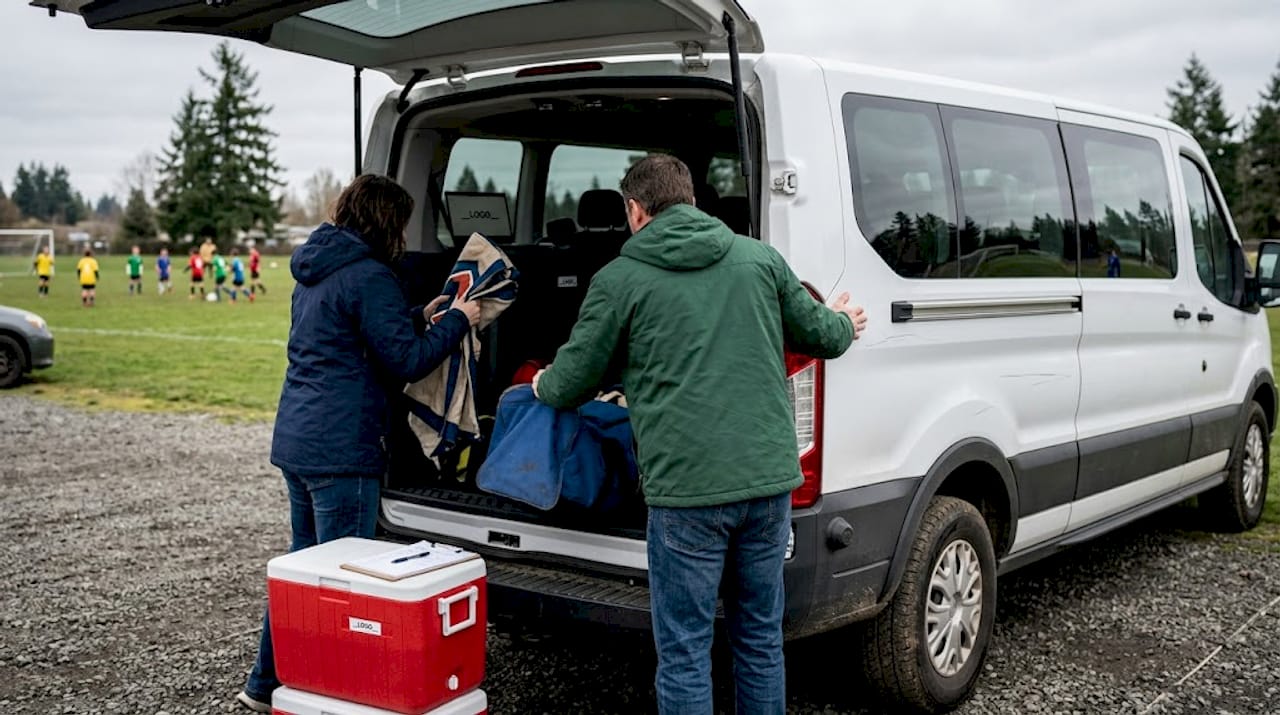
For any bus or charter operator you consider, vehicle compliance standards require FMCSA (Federal Motor Carrier Safety Administration) compliance. Always verify this before booking a commercial carrier.
Pro Tip: For teams between 10 and 14 people, a professional shuttle van service often hits the sweet spot of cost, comfort, and convenience without the complexity of a full charter.
Comparing group transport options
Now, weigh these choices head-to-head for your event.
| Option | Group size | Relative cost | Flexibility | Best for |
|---|---|---|---|---|
| Charter bus | 30 to 55 | High | Low to medium | Large teams, long trips |
| Shuttle van | 8 to 14 | Medium | High | Mid-sized groups, short hops |
| Carpool/rideshare | Any | Low | Very high | Informal, small groups |
| Limo/party bus | 10 to 30 | High | Medium | Special events, celebrations |
| Public transit | 1 to 6 | Very low | Very low | Small groups, no gear |
| Rental van/SUV | 5 to 9 | Medium | High | Gear-heavy, self-managed trips |
A few things stand out when you look at this side by side. Shuttle vans win on value for most everyday team events. They're affordable, easy to route, and professional enough for corporate settings. Charter buses dominate when your group exceeds 20 people or when the trip is long enough that comfort becomes a real factor.
Key takeaways from the comparison:
- Shuttle vans are the most versatile option for groups under 15
- Charter buses are worth the cost for 30 or more people
- Carpool works only when timing risk is low
- Limos and party buses serve a specific, celebratory purpose
- Rental vehicles require the most hands-on management
One detail many coordinators miss: local traffic guidelines in Snohomish County treat all vehicles under the same general parking and traffic framework. There are no special exemptions for group charters, which means large buses face the same parking restrictions as any oversized vehicle. Always confirm that your destination has appropriate space before you commit to a vehicle type.
A useful rule of thumb: if your group is 15 or fewer people, a shuttle van almost always makes more logistical sense than a charter bus, even if the bus feels more impressive on paper.
Matching the solution to your team's needs
Ready to decide? Here's how to tailor your choice to your team's plans.
Different events call for different solutions. A youth soccer tournament has completely different demands than a corporate leadership retreat. Knowing your event type is just as important as knowing your headcount.
Here's a scenario-based breakdown to guide your decision:
- Sports tournament (20 or more players plus staff): A charter bus keeps the whole team together, handles equipment storage, and avoids the parking chaos that comes with multiple vehicles at a busy venue. Book early because tournament weekends fill up fast.
- Corporate offsite or team retreat (10 to 14 people): A professional shuttle van is usually the right call. It's cost-effective, easy to schedule, and projects a polished image without the overhead of a full bus.
- Small team outing or client event (6 to 9 people): A rental van or a premium rideshare service can work well here, especially if the group is flexible on timing and the destination is easy to access.
- Award ceremony or celebration (any size): A party bus or limousine adds an experience layer that reinforces the occasion. This is one scenario where comfort and atmosphere justify the higher price.
- Last-minute or informal gathering (4 to 6 people): Coordinated carpool or rideshare is perfectly reasonable when the stakes are low and timing is flexible.
Always check with the venue and county on large vehicle rules before finalizing your transport. Parking restrictions vary by location, and a bus that can't park near the venue creates more problems than it solves.
The smartest coordinators build a short venue checklist before booking: confirm large vehicle access, identify loading zones, and ask whether the venue has a designated drop-off area. Doing this 48 hours in advance prevents the kind of day-of scrambles that make everyone's job harder.
What most team organizers overlook about group transportation
Most organizers spend the bulk of their planning energy on price and comfort. Those things matter, but experienced coordinators know that real-world logistics and local rules often become the deciding factors once the event day arrives.
Here's what tends to catch people off guard: a venue that looks perfectly accessible on a map can have loading zone restrictions, weight limits on access roads, or parking rules that effectively ban large buses. General traffic and parking rules in Snohomish County apply uniformly, and no charter agreement overrides a no-parking zone.
Last-minute changes are also more common than anyone wants to admit. A venue shift, a time change, or a weather delay can unravel a carefully arranged transport plan in minutes. The providers who handle these situations well are the ones who offer real communication and actual flexibility, not just a good price on paper.
Pro Tip: Build a backup plan into every group transport arrangement. Know in advance what happens if the venue changes, if a vehicle breaks down, or if your group size shifts by 20 percent. A provider who can answer those questions confidently before you book is worth paying a little more for.
The most overlooked factor of all? Parking capacity at the destination relative to your vehicle choice. Getting this wrong is the single most common reason group transport plans fall apart on event day.
Take your team anywhere, stress-free
Planning group transportation doesn't have to feel like a second job. If you've worked through the criteria and comparisons above, you already know what your team needs. The next step is finding a provider who can actually deliver it.
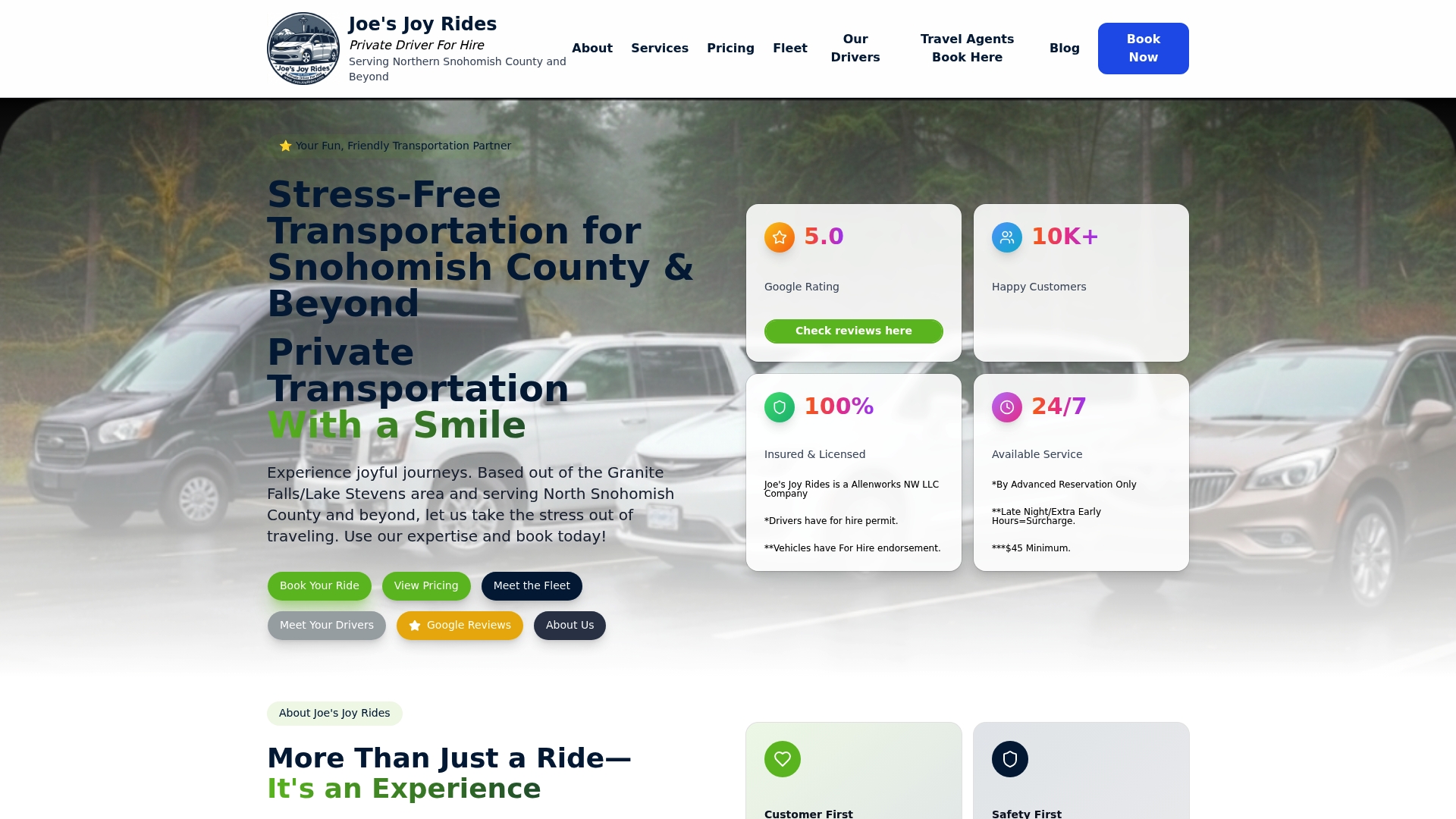
Joe's Joyrides team options cover everything from airport shuttles to sports outings and corporate events across Snohomish County, Granite Falls, Everett, and beyond. With vehicles seating up to 14 people, 24/7 availability, and door-to-door service, Joe's Joy Rides takes the guesswork out of group logistics. Whether you're heading to a tournament, a company retreat, or a Seattle game, the team is ready to handle the details so you don't have to. Reach out today to talk through your event and get a solution that fits your group.
Frequently asked questions
Are there parking restrictions for large team buses in Snohomish County?
No unique rules apply specifically to team buses. General county parking regulations govern all vehicles, so check your event venue's policy and confirm large vehicle access before booking.
What's the best transportation option for a team of 30 or more in the Pacific Northwest?
Charter buses are usually the strongest choice for large teams because they offer the capacity, comfort, and equipment storage that other options can't match over longer distances. Group size is the primary factor that makes charter the right call at that scale.
How do I confirm a transport provider is compliant in Snohomish County?
Ask whether the operator follows FMCSA compliance standards and verify their credentials against county traffic requirements before signing any agreement.
Is public transit a good option for sports teams?
Public transit rarely works well for sports teams because routes often miss event venues and carrying gear on public vehicles is impractical. It can work for very small, well-organized groups with no equipment, but it's not a reliable primary solution for most team events.